Even though it’s usually a mistake (grin) … do movies made out of books make you want to read the original?
**********
Short answer: no. I can think of some movies I’ve seen before I read the books — or before I even knew there was a book: Alice in Wonderland, The Yearling, The Wizard of Oz. Then when I was older: A Room with a View, The Remains of the Day, The Children of Men. But it’s not like I watched the movies and thought, “Oh, I’ve GOT to read this!”
Ironically, the only movie I did have that response to — “I would really love to read the book this is based on” –I haven’t gotten around to yet: Freedom Writers.
Probably I’ll go read some other responses, and it will jog my memory and remind me of book/movie combos I’m forgetting. But for now, this is my answer.
It’s our last week before starting school, and we’re spending it in Narnia and Middle Earth. The Narnia Challenge inaugurated a Narnia-fest that shows no signs of letting up anytime soon. Since the Challenge concluded, I’ve read The Narnian and Till We Have Faces. The girls have listened to The Last Battle in audiobook form, courtesy of the library and Patrick Stewart. At bedtime, Older Daughter requested The Silver Chair, so I’ve been reading that one aloud.
A few thoughts on audiobooks: I have mixed feelings about them, but it’s heartening to see that they do not replace reading. The girls have listened to The Silver Chair before, yet they want to hear it again. Older Daughter can’t really abide the slow pace of a chapter or two a night; she has to take it to bed and read ahead. She doesn’t mind hearing it again the next night — in fact, she wants to. So maybe the audiobooks have ignited a hunger for stories in a way that doesn’t replace independent reading, but inspires it.
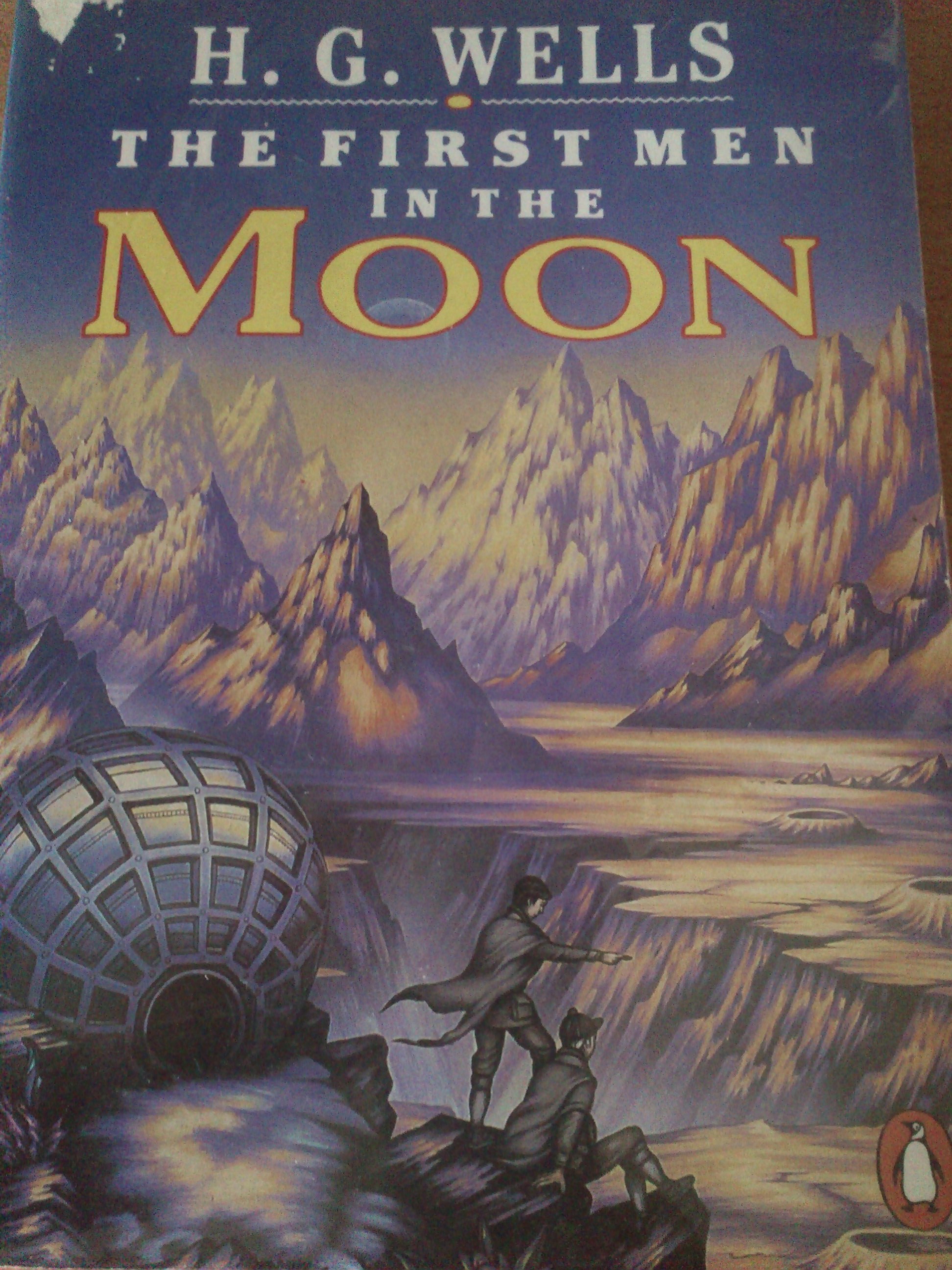
One more observation. I have tried to read The Hobbit aloud before and failed dismally. It’s one of those books I can read alone, but I don’t seem to have the patience to read it aloud. (This is regarded as a major character failing by my oldest.) I was excited to find an audiobook version at the library, and it has been playing around here for the last few days, to everyone’s delight. Listening, I realize that there are a few distinct advantages:
I’m learning that the best reading is unhurried. Maybe it’s because it’s at bedtime, but I tend to speed-read when I’m reading to the girls. How much more the magic unfolds when this reader takes his time!
Professional readers do the voices fabulously. I have a repertoire of maybe three voices, and I tend to forget which voice belongs to which character.
This reader does all the songs. I can do Frances the Badger’s songs, but I’d never have the patience for Bilbo Baggins’s!
Audiobooks never tire. I do. Especially if I’m reading after lunch or in the evening. My mind starts to get fuzzy, and I’ll start “reading” lines that aren’t there. “What??” Older Daughter will ask sharply. Hallelujah for the cd player that never lapses into dreamland with its eyes open.
Once again, the girls surprised me by sticking with it almost all the way through. They left during the spooky scene where Nikabrik and Caspian conjure the witch. I was just as glad.
Older Daughter said that one of her favorite parts was when the eagle lifted the sentry off the roof of Miraz’s castle and put Edmund down in his place. She also liked the battle. I’m pretty sure Younger Daughter liked Reepicheep the best. Every time he appeared, she chuckled affectionately. She has a tender heart and cried a little at the beginning, when the Pevensies figure out that they’re in a decayed Cair Paravel.
I always find the mythical animals disappointing in the movies, but the girls really like them. “Now I can picture centaurs,” Older Daughter explained. It bothers me that the centaurs can’t seem to run… They do everything in slow motion, and have strange faces and accents. But the kids didn’t notice any of these things.
The whole talking animals thing inspired hours of play afterward, starting that evening. One daughter, seized with the excitement and conflict of the movie battle, crept up on the hamster cage and then, suddenly, reached up her finger and tapped it in the hope of startling the hamster. Boy did it ever work. She was quite repentent when the hamster let out a sustained shriek of terror.
So there you have it. Our first hamster shriek. Is that a measure of a good movie, or what?
I’m having a hard time with the fact that school starts next week. It’s going to be difficult to make the transition from these fantasy lands back to ancient Egypt…
I’ve been reflecting lately on my conversion experience as a child. I’m not so sure that what I was converted to is superior to what I was converted from. Sometimes it seems like I’ve spent most of my life trying to get back to my pre-conversion faith.
As far back as I can remember, I loved Jesus. My mother and I prayed by my bedside each night, and I had a consciousness of God as a loving father. I knew Jesus as my friend. When I sinned, I asked God to forgive me. It was a very natural walk of faith.
In Sunday school one day, I learned that if you didn’t “ask Jesus into your heart,” you went to hell. I had never done this, but I didn’t feel panic. I felt embarrassment. Here my friend was waiting for an invitation, and I had been rude unawares! So I “prayed the prayer,” said the words, “asked him into my heart.”
Wasn’t he already there?
I’m not so sure the formula was necessary. But I’m sure it was damaging in some ways. For several years after that, whenever there was an altar call, I would go to the altar and say the prayer again — just to make sure. It was fear-driven. Why? Because being presented with a necessary formula suggested to me that this whole “relationship with Jesus” thing was complicated. It had hidden rules. I’d thought the Lord and I were walking in friendship together; I’d believed in his love for me, and mine for him — but I’d been mistaken. There was a secret password that had needed to be said. Maybe there were others lurking somewhere.
That sense tends to hang with me still. I wonder if I’m the only one. Anyone who looks at the Bible as a goldmine of secrets has a vestige of the same attitude…
Recently my husband invited me to listen with him to a sermon on the prodigal son. It was good teaching, but I was struck by the contrast between the way we use that story, and the way it was when Jesus first presented it. We excavate it, dissecting it for its underlying meaning. Jesus simply told it, a story on a hillside about the extravagant love of God.
Without offense to the art of preaching, and readily acknowledging that I like a good expository sermon, I have to ask whether this approach takes us closer to the heart of God — or farther away. Sometimes I wonder whether if we just gathered and read the Word together, without extracting concepts from it, its power might be more fully released in our lives. When asked why he told stories, Jesus didn’t answer, “So that they can be subjected to analysis.” He answered,
“The knowledge of the secrets of the kingdom of heaven has been given to you, but not to them. 12Whoever has will be given more, and he will have an abundance. Whoever does not have, even what he has will be taken from him. 13This is why I speak to them in parables:
“Though seeing, they do not see;
though hearing, they do not hear or understand. 14In them is fulfilled the prophecy of Isaiah:
” ‘You will be ever hearing but never understanding;
you will be ever seeing but never perceiving. 15For this people’s heart has become calloused;
they hardly hear with their ears,
and they have closed their eyes.
Otherwise they might see with their eyes,
hear with their ears,
understand with their hearts
and turn, and I would heal them.’ 16But blessed are your eyes because they see, and your ears because they hear. 17For I tell you the truth, many prophets and righteous men longed to see what you see but did not see it, and to hear what you hear but did not hear it.
I think that Jesus is suggesting here that stories are his optimal form because they are suggestive, not expository. It’s kind of puzzling, but there it is again: “the secrets of the kingdom.” That’s what I complained about earlier in this post. But he’s not talking about secret passwords. He’s talking about truth that transcends a fallen understanding. Those whose hearts are seeking can apprehend the truth they’re looking for. He’s avoiding giving people scripts and formulas and analyses because the “secrets of the kingdom” — God’s way of seeing things — can’t be reduced to that form. He uses stories instead.
I think that as a pre-analytical child I was attuned to “the secrets of the kingdom.” In some ways my whole church experience has subtly invalidated that un-formulaic kind of spiritual life. (I say “church experience” because it distributes the responsibility between me and the church.)
We learn to walk and talk and breathe not by reading books about it — not by appeals to the mind — but by having something innate called forth by desire. We want to move. We want to communicate. We want to live. Shouldn’t spiritual life resemble physical life in this sense? We are given the new life not by saying a formula, but by having our innate love for God called forth by desire — by a glimpse of Him, shimmering in the stories of His Word, shimmering in the eyes of His children, shimmering in the glory of His world. We don’t spend the rest of our lives reading books about walking and talking and breathing. We just do these things, and gain more skill the more we do them.
I have a great heritage and lots of great saints and praying people God has put in my path. But I have to wonder how I might be different today if my story didn’t have that chapter about learning the formula in Sunday school. My heart already belonged to God. If that had been confirmed, I wonder if my faith today would be more natural and vital. I wonder if I would have grown in a different direction, more straight and true, more confident of God’s love for me, less plagued by the self-conscious feeling that I have to make sure I’m “correct.”
I wonder if it’s too late to get back to it… or forward into it… or… something.
Barbara hosts The Week In Words, an opportunity to share some quotations we’ve read over the last week. I thought that in honor of our new pet, I’d select a few quotes from rabbit stories. Can you identify them?
Here goes:
He spoke of Moonwood the Hare who had such ears that he could sit by Caldron Pool under the thunder of the great waterfall and hear what men spoke in whispers at Cair Paravel.
It is said that the effect of eating too much lettuce is ’soporific.’
I have never felt sleepy after eating lettuces; but then I am not a rabbit.
Peter Rabbit! Peter Rabbit! I don’t see what Mother Nature ever gave me such a common-sounding name as that for.
In the great green room, there was a telephone… and a red balloon… and a picture of… the cow jumping over the moon.
He was fat and bunchy, just as a rabbit should be; his coat was brown and white and very soft.
Once, in a house on Egypt Street, there lived a rabbit who was made almost entirely of china.
Once there was a little bunny who wanted to run away.
He was going to find a home of his own; a home for a bunny, a home of his own, under a rock, under a stone, under a log, or under the ground…
These last two are more obscure:
Everybody is bigger than I am. My mother. My father. My father is enormous. A robin is bigger than I am. A cabbage is bigger than I am. So is a tree. But I’m almost as big as a carrot.
“Wait, Rabbit!” said Skunk. But Rabbit ran fast down the road. “Wait, Rabbit. Rocks can’t make noises,” said Skunk.
“That rock did,” said Rabbit.
That about does it. Hop on over to Stray Thoughts to see what others are posting. I’ll be glad to clear up any mysteries about the origin of these a little later.
I’ve come across some mull-worthy things here and there this week.
There’s an interview with Nicholas Carr, author of The Shallows, here. It’s interesting not just as an overview of the book, but for the tone of the interviewer, who characterizes Carr as “worried.” (What’s most striking about the book is that its tone is not “worried,” though the content of the book may — should? — be worrying to readers unacquainted with the subject.)
My pastor sent me the link to this Wall Street Journal article: “The Perils of Wannabe Cool Christianity.” It paints with a broad brush, and as my pastor noted it uses some “shock tactics” to make its point. But it is a thought-provoking bit of perspective on what my brother has called “The Hip Church.” I tend to agree, in the main, with the argument that the evangelical church is making a big mistake by stressing “packaging” to the point of changing the gospel. (I’ve even written about it before in posts like this, this, and this.)
This New York Times article is about what it terms “velcro parents” — parents who have a hard time detaching from their children when they take them to college. Colleges are instituting practices that gently give parents the boot during freshman orientation. Parents need to detach, obviously. But I think the same mythology that exists about public school — that it’s “preparation for real life” — exists about the college campus, and it really fits neither setting. Unless college freshmen are picking up the tab themselves, it’s still a very sheltered experience. At Walmart last week, there was a big banner up that read, “Students, declare your financial independence!” It was an inducement to open a charge account with some entity or other. Unless students truly are “financially independent” — and therefore mature in the ways necessary to meet those obligations — I think they’re probably better off under the thumb of parents who love them than corporations who exploit them. No, that doesn’t mean parents should hang around and attend classes with their kids, like some of those in the article. But I’m a bit skeptical of the altruism of the university, too. So I’m still mulling this one.
Here is a glimpse of what happens to my living room when we take the new rabbit out: blankets and boxes everywhere for him to explore, rug rolled up, hamsters rolling indiscriminately here and there, the television in the background as Doug and I watch our one t.v. show for the week, and giggling girls.
Several weeks ago, when I finished Catching Fire, I pre-ordered this book from Amazon. Last week I decided I was mature and cool-headed enough to wait till the library copy was available, canceled my order, and put my name on the hold list.
Then a few days ago, in Walmart (that goldmine of cultural riches), there it was on the shelf. I withstood the temptation for 24 hours. Then… I snagged it.
In some ways, this final installment of the trilogy that began with The Hunger Games was every bit as good as its predecessors. Suspenseful. Lean. Moving. It engages the deep issues: war, greed, the craving for power, the banality and dependence of a media-crazed society. Katniss Everdeen is back and as gutsy and scornful of celebrity as ever.
Some of our questions get answered: will Peeta survive? And if so, will Katniss end up with Peeta or Gale? Will President Snow be defeated? Will a “new world order” be set up in Panem? What will become of the characters we’ve come to care about?
But I wouldn’t be honest if I didn’t admit to my disappointment. The book rolls along addictively until the final pages, where the “resolution” seems to fall flat. Most of it takes place off-stage, so to speak. And ultimately there is no vision of the good that doesn’t come off looking a bit pallid and numb. Evil ravages, but goodness merely hides. Or so it seemed to me.
One of the most provocative aspects of the story for me was the way it kept inviting me to consider the question all three books have raised: who is the enemy? I reached the last page with the feeling that to Katniss, it has remained elusive. Mockingjay raises important questions and dishes up plenty of thrills. But it doesn’t offer much hope.
This is Whisper. He’s a mini-Rex rabbit, as plushy as can be, with distinguished curled whiskers. He’s about two months old.
We’re all enjoying him. He has a relaxed personality and isn’t unnerved by the dog or the children. Last night we rolled up the rug and had him out of the cage to explore a bit, and we put the two hamsters in their racing balls too. It’s quite the menagerie around here.
He seemed to really enjoy the one toy we had for him — a carrot with a rattle inside that he swung and tossed and chewed.
The towel he’s on is an old hooded bath blanket my sister-in-law made for the girls when they were babies. Maybe you can tell what it’s supposed to be.
My husband is quite pleased to have another male in the house at last. I think the two of them will be sticking together.
Month after month, I’ve missed the Nightstand carnival at 5 Minutes for Books. But this month I’m ready! Here’s what I’ve had on my nightstand since the end of July, with blurbs from/links to my reviews:
“The Aunt and Amabel,” a short story by Edith Nesbit. Some speculate that this tale about a girl who finds a magic wardrobe may have inspired C.S. Lewis. I wrote, “Other than the wardrobe, I found very little similarity between the two stories. What I had read suggested that the idea of a wardrobe may have been stored unconsciously in Lewis’s mind for years before he produced his own wardrobe story, but really the tales are quite different.” Full review here.
The Shallows: What the Internet Is Doing to Our Brains, by Nicholas Carr: “The book’s central thesis is that the Internet, like certain other technologies that have swept through human history, does in fact change brain function. Carr investigates the science of how this happens, provides some cultural history tracing the steps that led to the current technology explosion, and offers a thoughtful and detailed discussion of the various aspects of the Net’s development and increasing influence.” Full review here.
The Narnian: The Life and Imagination of C.S. Lewis, by Alan Jacobs. “I’ve been working through it slowly and savoring its even-handed, discerning discussion of this much-loved writer. Jacobs tells the story of Lewis’s life with respect for its complexity and, for the most part, a willingness to acknowledge its mystery.” Full review here.
Till We Have Faces, by C.S. Lewis. “This is the third time I’ve read this novel, and I think I’m ready to give up on liking it. It is often praised as one of Lewis’ best, but even though it engages my mind, I can’t seem to enjoy it. Probably I am missing something. After all, that’s one of the themes of the novel — what we think we know vs. what we really know.” Full review here.
The Hiding Place, by Corrie Ten Boom. “The Hiding Place is the story of Corrie Ten Boom, a Dutch woman best known as a participant in the Dutch underground during the second world war whose home had a hidden room to shelter those fleeing Hitler’s regime. Or so I’ve always had her classified in my mind. This book makes it clear that her life and impact include much more.” Full review here.
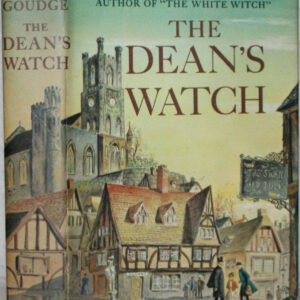
Currently I’m reading Pilgrim’s Inn by Elizabeth Goudge, the second in her trilogy about the Eliot family. I’m still waiting for A Theology of Reading by Alan Jacobs, which I ordered about three weeks ago. And I’m on the hold list for Suzanne Collins’ Mockingjay, due out in about a week. So that’s the prospect from here.
How about you? Read others’ posts, or join in with a Nightstand post yourself, at 5 Minutes for Books.
It’s a commonplace, but the teachable moments come so often when you wouldn’t expect them. I’ve been noticing it lately.
One of my daughters has deep questions. It’s when I’m drying my hair in the bathroom, or making my bed, or loading the dishwasher, that I’m invited urgently into her room with the door firmly closed behind me so that she can ask a question or make a confession. I don’t have a playbook for such times, but so far God has been gracious about providing a meaningful response for me to make.
Our timeline
As we’ve studied modern history this summer, I’ve found myself, frequently, getting choked up as we read the chapters. There is so much that’s horrible: the world wars, the assassinations, the holocaust. I want to teach these things with composure, making good points along the way. Instead, I’m reduced to a quavering, sniffling creature pausing to take deep breaths as I read. Yet — dare I hope that even such moments as these are instructive? C.S. Lewis lamented “men without chests” in The Abolition of Man — students produced by the “objective” philosophy of education that says all value judgments are simply a matter of personal opinion. We should be instructing the heart along with the mind, he argued. Dare I hope that this can happen even when my response is unplanned weepy horror — or, at the opposite end, unplanned weepy delight at the examples of courage and heroism sprinkled throughout the pages as well?
Or the other moments that pass so quickly… Jack Ruby shoots Lee Harvey Oswald, for instance, and one daughter says, “Oswald deserved it.” And I reply, “God loved him too.” Such a brief moment, gone in an instant. I wasn’t prepared with anything longer or more developed than that. Yet isn’t a worldview formed by many such moments woven throughout an education?
God, please keep me in tune with you as the planned education, and the shadow education, unfold side by side.
Concerning this salvation, the prophets, who spoke of the grace that was to come to you, searched intently and with the greatest care, trying to find out the time and circumstances to which the Spirit of Christ in them was pointing when he predicted the sufferings of Christ and the glories that would follow. It was revealed to them that they were not serving themselves but you, when they spoke of the things that have now been told you by those who have preached the gospel to you by the Holy Spirit sent from heaven. Even angels long to look into these things.
Therefore, prepare your minds for action; be self-controlled; set your hope fully on the grace to be given you when Jesus Christ is revealed.
RECENT COMMENTS: