Learning Curve

I’m trying to learn how to photograph birds in flight. I’ve taken so many pictures, and few if any have turned out. Today I’ve done some reading on the subject and feel encouraged; there are some things I can do, some adjustments I can make, to improve.

Meantime, I’ve been reading Barbara Brown Taylor’s An Altar in the World, so far a very satisfying book about cultivating a sacramental approach to life. She talks a fair amount about nature, and about the need to be willing to stop and pay attention. She sounds a little bit like Brother Fowles in The Poisonwood Bible when she writes,

Like anyone else, I do some picking and choosing when I go to my holy book for proof that the world is holy too, but the evidence is there. People encounter God under shady oak trees, on riverbanks, at the tops of mountains, and in long stretches of barren wilderness. God shows up in whirlwinds, starry skies, burning bushes, and perfect strangers. When people want to know more about God, the son of God tells them to pay attention to the lilies of the field and the birds of the air, to women kneading bread and workers lining up for their pay.

Whoever wrote this stuff believed that people could learn as much about the ways of God from paying attention to the world as they could from paying attention to scripture.

I have been learning to pay attention with a camera, and it’s strange the hold it has taken on me. Who needs so many pictures of birds and butterflies and flowers and landscapes when we can look around and see them all with our naked eyes? I don’t know. But there is something about the camera around my neck that has improved my naked eyes — or improved the nerve pathways from eye to heart. I believe that God loves it when we admire his world, and I have reaped the benefit in sheer pleasure as I notice things I never noticed before.

It’s a learning curve of sorts — learning to see, and to capture what I see, and to read it. Yesterday I watched this young hawk for awhile, and it seemed to be experiencing a learning curve as well, navigating the breezes and trying to decide whether I was friend or foe. The pictures are not sharp, but even so they give the sense of the bird’s grandeur even in its indecision and awkwardness. Maybe next time, I’ll capture it better. Meantime, it’s a picture of young royalty — a red-tail whose tail is not yet red, whose instincts are not yet wise to humans, but whose symmetry and strength inspire all the same.


The introvert and the altar call

Where there is too much input, the introvert misses his mind, his subjectivity, his freedom, his very potential… He can’t wait to be free — to get out and away from the noise, the talk, the interference with his inner process. (Laurie Helgoe)

I dislike altar calls.

There. I’ve said it.

Frequently in our church, there is a call for some kind of external response to what has been presented. From time to time I find myself reflecting on this phenomenon in evangelicalism. It seems to reflect the desire to see immediate, measurable results. But there is little of importance that happens in my life immediately and measurably. The mustard seed gets planted, and grows into the tallest tree in the garden, but it’s seldom immediately recognizable as such, and the planting is never public.

The engine of my spiritual life is my personal time with God, not corporate worship. Church is where I learn and am kept on track doctrinally. Church is where I find fellowship and inspiration and opportunity to serve. But it’s not where the heartbeat of my relationship with God is. As I delve into Introvert Power by Laurie Helgoe, I wonder if this is partly temperamental.

In my morning time, I have some space and quiet to interact with God — to talk, hear, read, discuss, confess, dream. At church, it’s like a conveyor belt: there is a schedule. The allotted time for “response” is hemmed in by whatever needs to happen next in the service. Maybe this is why I pretty much never hear prompting from God to “go forward” and pray. There isn’t much that he wants to say to me or hear from me that can be said in a few minutes at the altar.

The public altar is not a quiet place. There is usually music, and I find this distracting. Along with the music is the verbal suggestion of whoever is making the altar call — a prayer, or further exhortation, or whatever. But I need space and quiet to formulate my own thoughts. In the times I do go forward to pray, I often find myself simply waiting for a quiet moment that never comes. Once, we went forward as a family, and this happened. It made me sad.

Of course many folks love the chance to go to the altar as often as possible. They aren’t bothered by the things I see as constraints, and maybe the public element makes the experience seem more real for them. But I have an uneasy relationship with the altar call and frequently find myself sitting in my seat wondering if I’m being judged for it. I think that for certain personalities, passing up the opportunity to go forward can be a valid way of keeping one’s private business with God safe and real.

Recent Reading: George MacDonald

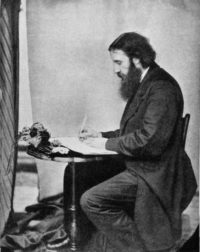
How do I characterize George MacDonald’s sermons? I’ve been thinking about this question off and on for several days. I’ve been reading his Unspoken Sermons for a couple of years now, a little at a time, because it’s inconceivable to take them in more than the smallest bites. There is a prophetic depth and unity to George MacDonald’s comprehension of God that demands every bit of intellectual effort I have to offer, every bit of concentration. It’s like he’s tapped into the underground stream of living water running under the whole ground of Scripture. Reading these sermons is a beautifully stern corrective to all kinds of little contaminations and blurry spots in my understanding of God — false steps and inconsistencies that I didn’t know were there.

It’s well known that C.S. Lewis was deeply influenced by George MacDonald, writing about the Unspoken Sermons, “My own debt to this book is almost as great as one man can owe to another: and nearly all serious inquirers to whom I have introduced it acknowledge that it has given them great help — sometimes indispensable help toward the very acceptance of the Christian faith.” No wonder it’s two scenes from Narnia that my hand falls upon as I grope for a picture of how I feel when reading these sermons. One is when Jill, Eustace, Puddleglum, and Prince Rilian look down into the kingdom of Bism in The Silver Chair — a chasm deeper than they ever imagined, glowing with heat from its ever-burning fires and its living jewels waiting to be picked and eaten like grapes. The other is in Dawn Treader, when Eustace feels the at once terrible and exquisite pain of his dragon-skin coming off. Every time I read in Unspoken Sermons, I have those feelings of hitherto unimagined sights coming before the eye of my heart, and the birth pains of change tingling in my life.

These last few weeks I’ve read two sermons, “The Consuming Fire,” and “The Higher Faith.” It’s the first one I want to think about here, because it has been the most “consuming” in my thoughts. MacDonald begins with Hebrews 12:29, “Our God is a consuming fire,” and meditates on the significance of fire as an emblem of God’s character throughout the Bible: the burning bush, Mt. Sinai, the burning of purification, even hell and the lake of fire. The primary thing about God’s burning, MacDonald urges, is his love — love which is inexorable. When we cooperate, the burning of God may be painful, but it has a gentleness. God doesn’t give us more revelation than we can bear. But if we set ourselves against it, the burning continues, because God continues to love, and to burn away all that is unlovely. In this way even hell, even the casting of death and hell into the lake of fire, are reconciled with, and are expressions of, God’s love.

Never would this have occurred to me. In our limited understanding it can be difficult to reconcile God’s tenderness and his wrath, but this sermon reveals the unity of God’s nature and the pervasiveness of his love.

This sermon has stayed in my thoughts lately, not just because of its transforming insight, but because of the number of coincidences that have brought it to mind. MacDonald speaks of Moses’ partial revelation of God on Sinai, when he asks to be blotted out of God’s book because of the sins of his people. Then God reveals himself again to Moses, partially — only his back, because no one can look on his face and live. After reading MacDonald’s discussion of it, this same passage came up in the girls’ and my Bible reading this week. We talked about why “no one can look upon God’s face and live.” A few days later, Younger Daughter came out of her room, where she was listening to the audiobook of The Lion, the Witch, and the Wardrobe, and told me that she had been reminded of the story again because when the Pevensie children meet Aslan for the first time, they find his face too beautiful to look upon.

I love it when this happens — when God develops a theme steadily over a period of time in different ways.

By far the most important revelation this sermon gives me is of God’s love. There are several passages I underlined, and I’d like to quote them all, but they are all better in context. So in the end I regretfully resist my impulse to insert long excerpts from “The Consuming Fire” here, and instead I recommend it in its entirety — along with the rest of the sermons in the book, to be taken in small doses as our ears are ready to hear.

Walking with God

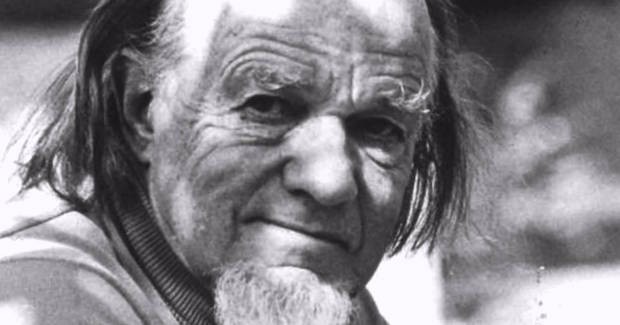
John Eldredge is a needed voice. He writes about something that might seem obvious — how to walk with God daily. But lately, listening to others, I’ve realized that this is something many people don’t know how to do. They know how to have a “conversion experience.” They know how to go to church, how to sign up for activities there, and how to talk the talk. But how to listen to God’s voice in their everyday lives? Not so much.

That’s where John Eldredge comes in with Walking with God. He takes us through a year of his spiritual journal, essentially. He demonstrates what it means to seek God through the Bible, and through prayer, and through being willing to stop and listen at moments that we might be tempted to blow right by — moments of heartache, or heaviness, or decision in comparatively small matters.

I have to stop here for a moment, because it’s so easy to judge what “small matters” are. I remember a Bible prof speaking on God’s will once when I was in college. He wanted to make the point that it’s okay to use common sense about some things, and at one point he leaned into the mic and said emphatically, “God doesn’t care what color tie you wear!”

Point taken — sort of. The same issue came up recently in our parenting class at church, where some of us questioned whether the author of the book we were reading was over-spiritualizing when he stopped the family and suggested asking God whether they should go to Disney World.

But really, couldn’t everything we struggle with here in our mundane lives be considered trivial to the eternal mind? The truth is, I’ve prayed for some embarrassingly trivial things, and when God has answered it has communicated his love and involvement very compellingly. In other more “important” matters, he remains silent. So who am I to judge what’s important and what’s not important to God? He has his own scale of values, his own plan that he’s unfolding. And more to the point, who am I to judge what’s “trivial” for someone else? Walking with God brought me back to this issue and reminded me that seemingly small, quiet moments can be the most significant of all in determining the course of our lives.

I struggle, though, with Eldredge’s warfare emphasis. Many times he comes back to the need to pray against demonic activity. Scripture teaches that there are demons, and they are active in the world. But reading this, the dark spirits come off sounding more powerful than God. If Jesus has already won the war, why would we have to re-fight every day by praying the incredibly specific prayers Eldredge gives here — prayers that imply that Jesus will not protect us unless we give him specific instructions as to how and against what.

In II Peter, we’re told that “his divine power has given us everything we need for life and godliness, according to our knowledge of him who called us by his own glory and goodness. Through these he has given us his very great and precious promises, so that through them you may participate in the divine nature and escape the corruption in the world caused by evil desires.” The battle is already won for those of us who are in Christ, and here Peter is telling us how to walk in that victory: through our knowledge of the truth. This is one of the things I loved about Spiritual Depression — its emphasis on the importance of knowing, and structuring our lives according to, Scripture. It’s not about going out and vanquishing demons by naming them and giving God instructions on how to fight them off. He’s already done that.

So much for my reservation about Walking with God (a reservation I also feel when I read Waking the Dead, another Eldredge book). But the basic model Eldredge provides is very useful and truthful. Eldredge has a realness, a grittiness, that carries a lot of credibility. He doesn’t sound churchy, or use evangelical-speak. He writes about real things that real people struggle with: runaway thought life, heart desires that we bury rather than trusting God with, the impulse to do life on our own. Dallas Willard writes that prayer is “talking to God about what we are doing together,” but it’s Eldredge who shows us what this looks like in an accessible way.

Bursting with God-news

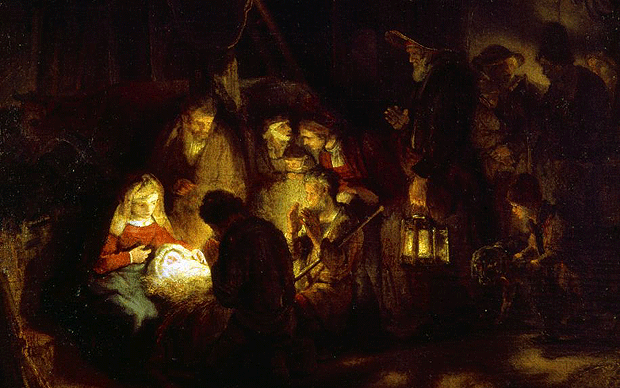
The Annunciation by Jack Mattingly

Upon entering, Gabriel greeted her:

“Good morning!
You’re beautiful with God’s beauty,
Beautiful inside and out!
God be with you.” (Luke 1:28, The Message)

This afternoon I heard the song “Breath of Heaven” on the way home from the grocery store. It’s a song I’ve always assumed I liked, but today I realized: I don’t, particularly. It’s not really in keeping with the Scriptural account of Mary’s character in Luke 1. (I’m speaking from a Protestant point of view, by the way.)

In “Breath of Heaven,” Mary talks about “a world as cold as stone.” But in Luke 1, she speaks of God’s presence in the world — of his “mercy upon generation after generation of those who fear him,” and of how he “fills the hungry with good things.”

In the song, Mary says, “Must I walk this path alone?” She imagines God is having second thoughts about choosing her: “Do you wonder as you watch my face if a wiser one should have had my place?” But in Luke 1, she’s not alone. She and Elizabeth have the great gift of companionship in their high calling. And her sense of who God is is anything but distant and aloof: “My soul exalts the Lord, And my spirit has rejoiced in God my Savior. For He has had regard for the humble state of His bondslave…”

In the song, Mary says, “Hold me together.” In Luke 1, she says, “The Mighty One has done great things for me; and holy is His name.” (And later, when Jesus goes to the cross, Mary is one of the few who has the fortitude to stand near him.)

It’s an idea we try over and over: projecting ourselves imaginatively into the Christmas story. Sometimes it enriches our faith and our depth of understanding. But in this case I think it alters the story, shrinking it down into a rather desolate, impoverished mindset.

Though sometimes (for me) The Message can have a similar effect of reducing Scripture to language that’s almost too pedestrian, I think in the case of Luke 1 it captures perfectly Mary’s spiritual exuberance and moral stamina:

And Mary said,

I’m bursting with God-news;
I’m dancing the song of my Savior God.
God took one good look at me, and look what happened—
I’m the most fortunate woman on earth!
What God has done for me will never be forgotten,
the God whose very name is holy, set apart from all others.
His mercy flows in wave after wave
on those who are in awe before him.
He bared his arm and showed his strength,
scattered the bluffing braggarts.
He knocked tyrants off their high horses,
pulled victims out of the mud.
The starving poor sat down to a banquet;
the callous rich were left out in the cold.
He embraced his chosen child, Israel;
he remembered and piled on the mercies, piled them high.
It’s exactly what he promised,
beginning with Abraham and right up to now.

Quiet he lies

Courtesy of Stockxchnge

Our pastor has been taking a close look at what some of our traditional Christmas carols have to teach us. It’s making this richest of seasons even richer.

Yesterday while teaching on “Hark the Herald Angels Sing,” he brought some lines from a poem by Luci Shaw to our attention. I wasn’t familiar with the poem, but it’s a wonderful discovery, honing in on some of the mind-blowing paradoxes of Christmas.

Here are a few excerpts:

Quiet he lies
whose vigor hurled
a universe. He sleeps
whose eyelids have not closed before…

Older than eternity, now he
is new. Now native to earth as I am, nailed
to my poor planet, caught that I might be free,
blind in my womb to know my darkness ended,
brought to this birth
for me to be new-born,
and for him to see me mended
I must see him torn.

–From “Mary’s Song,” by Luci Shaw. Read the rest of the poem here.

What words are bringing Advent into focus for you this season?

Overcomers

Today’s Oswald Chambers is very thought-provoking. I’ve been mulling it all day. It was a meditation on the phrase “to him who overcomes,” from Revelation 2.

I don’t normally quote things in entirety, but I find this such rich food for thought that I wanted to preserve it here. I love the way it teases purpose out of struggle. And I love the basic analogy to the natural world, where “the very elements that sustain me while I am alive work to decay and disintegrate my body once I am dead.” The difference is our internal disposition and energy; that’s what throws the balance in favor of inward life against outward decay. It reminds me too of the passage where Paul says though “outwardly we are wasting away, inwardly we are being renewed day by day.”

Anything that comes against the habitual passiveness of our convenience-saturated, consumer-oriented, machine-assisted comprehension of reality is welcome. For me this reading fit the bill.

To him who overcomes . . . —Revelation 2:7

Life without war is impossible in the natural or the supernatural realm. It is a fact that there is a continuing struggle in the physical, mental, moral, and spiritual areas of life.

Health is the balance between the physical parts of my body and all the things and forces surrounding me. To maintain good health I must have sufficient internal strength to fight off the things that are external. Everything outside my physical life is designed to cause my death. The very elements that sustain me while I am alive work to decay and disintegrate my body once it is dead. If I have enough inner strength to fight, I help to produce the balance needed for health. The same is true of the mental life. If I want to maintain a strong and active mental life, I have to fight. This struggle produces the mental balance called thought.

Morally it is the same. Anything that does not strengthen me morally is the enemy of virtue within me. Whether I overcome, thereby producing virtue, depends on the level of moral excellence in my life. But we must fight to be moral. Morality does not happen by accident; moral virtue is acquired.

And spiritually it is also the same. Jesus said, “In the world you will have tribulation . . .” (John 16:33). This means that anything which is not spiritual leads to my downfall. Jesus went on to say, “. . . but be of good cheer, I have overcome the world.” I must learn to fight against and overcome the things that come against me, and in that way produce the balance of holiness. Then it becomes a delight to meet opposition.

Holiness is the balance between my nature and the law of God as expressed in Jesus Christ.

A little further on, in Revelation 2:11, we’re told that if we welcome opposition as an opportunity to assert the priorities of Jesus — to defer to the Spirit of Jesus within us –  we “will not be hurt by the second death.”

What a thought.

Sunset at the beaver pond